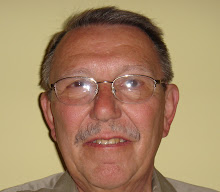
The latest book that I have read by Paulo Coelho is The Pilgrimage. This is an account of a religious pilgrimage taken by the author on the road to Santiago. Having failed to complete the final steps in his ordination as a Master of the Order of RAM (a minor religious order within the Catholic Church) his master assigns him to walk the Road to Santiago, an ancient Christian pilgrimage route beginning in southern France and continuing across northern Spain. It is a journey traditionally taken on foot and is one of three major medieval pilgrimages each of which provided a plenary indulgence to pilgrims completing the journey. Coelho is told by his guide that there is a fourth secret way to complete the set, but we never find out about this in this book.
The book has been described as a companion piece to The Alchemist, another fictional account of a young shepherd’s pilgrimage across North Africa in pursuit of his dream. Although the shepherd is usually referred to as "the boy" we find when we first meet him that his name is Santiago. Coelho begins to write The Alchemist shortly after completing the pilgrimage to Santiago which was a pivotal event in his life and in vocation.
The Pilgrimage is much more than a travelogue; rather it is an account of Coelho's spiritual journey. Although many pilgrims walk alone or with a group Coelho has a guide for the journey who is also a member of RAM. Along the road he learns nearly a dozen religious exercises of meditation, imagination and discipline. Petrus, his guide, tells him that the way they are following is not an exclusive road; rather the physical and spiritual journey they are on is a simple quest for God that is available to the common person. While his studies to be a Master of the Order of RAM taught him esoteric knowledge available only to a few the common person can participate in the simple exercises Petrus was teaching. Paulo gives detailed directions for each of these exercises, obviously inviting readers to learn each of them.
Along the way with Petrus’s help Coelho becomes acquainted with his personal devil who is an ally in the material world as well as learning to depend on his guardian angel. He learns to overcome his fears and defeat demons. At the end of the journey Petrus presents him with the sword which was denied him at his first initiation.
While pilgrimage is no longer a major part of Catholic practice and most Protestants are virtually ignorant concerning the concept Muslims would certainly understand. Over one million Muslims make the Hajj each year. This pilgrimage is one of the five pillars of Islam expected of every Muslim who is physically and financially capable.
It is worth reading!
Showing posts with label The Pilgrimage. Show all posts
Showing posts with label The Pilgrimage. Show all posts
Wednesday, December 03, 2008

Thursday, November 13, 2008

“In our obsessive wish to arrive, we often forget the most important thing, which is the journey.”
The Pilgrimage
Paulo Coelho
http://www.paulocoelhoblog.com/
I have read several more books by Paulo Coelho since writing about The Alchemist back in August. I find his writing absolutely fascinating, a wealth of the world’s wisdom, and a source of inspiration. As you may know he is Brazilian, his writings have been published in dozens of languages. On a world wide basis his works are best sellers, and I am told that he is very widely read and highly regarded in Brazil. Although he had a Jesuit education his spirituality draws from multiple sources, including magic and earth religions which have brought much criticism by the Brazilian Catholic Church. In The Pilgrimage he writes about his experience as a pilgrim on the road to Santiago.
In The Valkyries, another autobiographical book he writes some about his experiences in the world of Magic. His quest to become a Magnus, a spiritual master, took him into the desert southwest in this country where he was aided in his quest by the Valkyries, a group of women on motorcycles who go about preaching about the dawning of a new age, an open door to paradise.
Valhalla, the leader of the Valkyries is preaching in the following passage which should strike a familiar chord to those who have read Coelho.
“Have Courage. …Open your heart, and listen to what your dreams tell you. Follow those dreams, because only a person who is not ashamed can manifest the glory of God.”
“There is no sin but the lack of love…. Have courage, be capable of loving, even if love appears to be a treacherous and terrible thing. Be happy in love. Be joyful in victory. Follow the dictates of your heart.”
… “Remember that you are a manifestation of the absolute, and do only those things in your lives that are worth the effort. Only those who do that will understand the great transformations that are yet to be seen.”
Paulo wants the Valkyries to teach him to see angels. He knew how to speak to his guardian angel but he wanted to see his guardian angel as well. (In The Alchemist Santiago learns to speak the "language of the soul of the world"). Coelho describes the way that he speaks to his angel as “channeling”. This is a form of ecstatic speech, perhaps the verbal equivalent of automatic writing. Paulo teaches his wife Chris to listen to her second mind until it becomes silent, and then in the silence to began to speak without words, to speak the sounds that come to you. She at last makes a break through: “She began to move her head back and forth, wanting to do all that, and suddenly she wanted to make strange noises. And she did so. It wasn’t ridiculous. She was free to do as she pleased.” He describes it as the joy of a warrior entering into an unknown world. She needed to speak the pure language of the heart. “…she had to continue to speak, making the gestures that came to her, singing the strange melodies. Yes, everything must make some kind of sense because she had never heard these sounds before, these melodies, these words and movements.”
One thing that struck me as I read this was the parallel with speaking in tongues, which plays a prominent part in Coelho’s next book that I will review (soon, I promise) By the River Piedra I Sat Down And Wept.
Subscribe to:
Posts (Atom)